
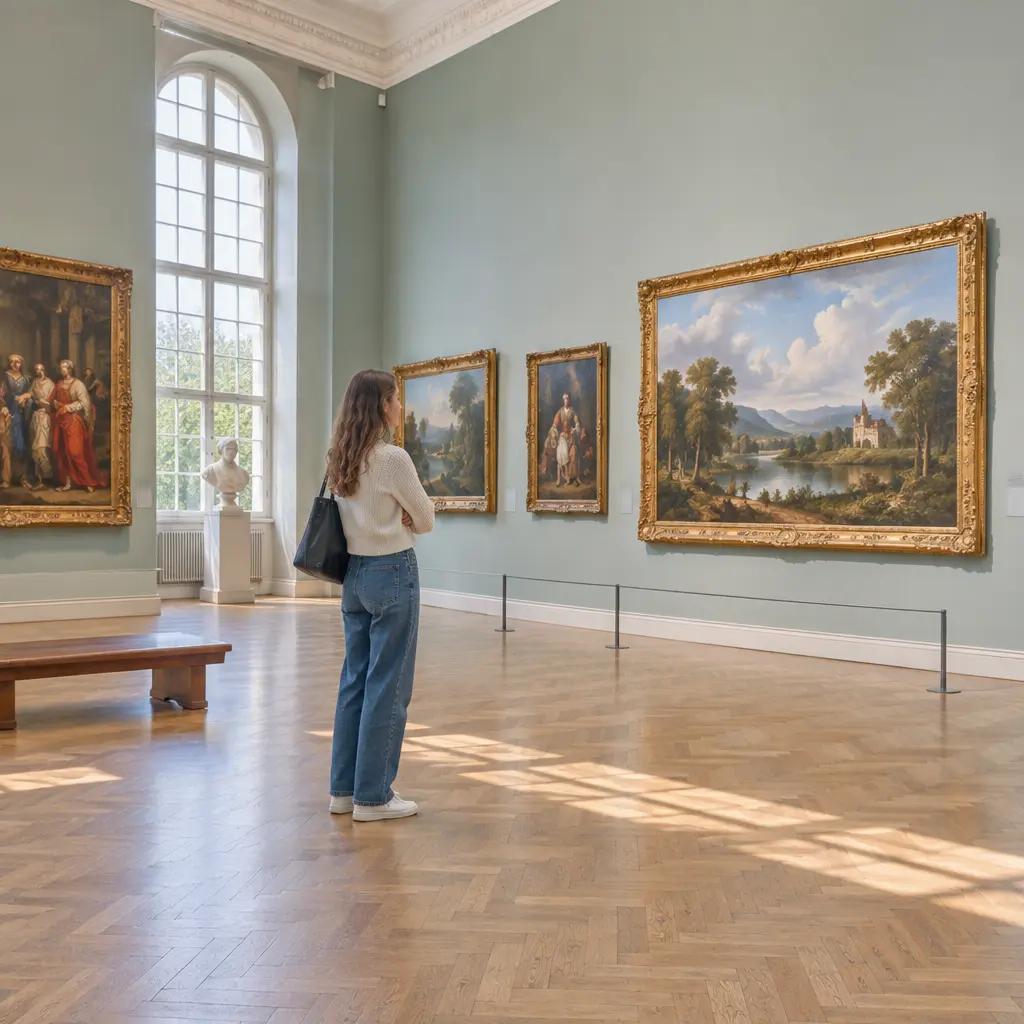
An art museum is a public institution that collects, preserves, studies, and presents works of art. To visit one like an expert, prepare lightly, look slowly, compare works, read labels selectively, and leave room for your own response. These habits are useful in a setting that can feel overwhelming: the American Alliance of Museums reports that U.S. museums collectively welcome hundreds of millions of visits each year, while research on museum-going suggests visitors often spend only seconds looking at an individual artwork. A more attentive visit can turn a quick walk-through into a rewarding encounter with art, history, and ideas.
Plan an Art Museum Visit with Purpose
Planning means making a few choices that support attention without turning the museum into a checklist. Museum professionals commonly encourage visitors to check practical information, choose a manageable focus, and allow time to pause. The goal is not to see everything; it is to engage meaningfully with what you do see.
Choose a focus, not a marathon
A focus is a theme, collection, artist, period, or question that guides your visit. You might follow how artists depict light, compare portraits across centuries, or explore one gallery in depth. The Metropolitan Museum of Art’s collection spans more than 5,000 years, illustrating why a selective route is often more practical than attempting to cover an entire large museum in one visit.
Check logistics and accessibility
Before leaving, confirm opening hours, ticket requirements, gallery closures, photography rules, and options such as seating, coat check, audio guides, and accessible routes. Museum websites and visitor desks are the best sources for current details. If you have limited time or energy, identify one or two priority galleries and a place to rest.
Set a realistic pace
A realistic plan includes breaks and unstructured time. The Louvre, for example, advises visitors to plan their route and notes that its collections are extensive; even a well-planned visit cannot substitute for a full survey. A useful approach is to select a small number of stops, then let curiosity determine what deserves extra time.
Look at Artworks with Attention
Close looking is the deliberate observation of an artwork’s visible features before settling on an interpretation. It is a core museum skill because it separates what you can actually see from what you assume or have been told. The practice also makes visual details—often overlooked during a fast walk-through—available for discussion and reflection.
Start with observation
Spend a few moments noticing the work before reading its label. Ask: What materials and colors stand out? Where does your eye travel? What seems close, distant, balanced, or unusual? The Museum of Modern Art’s teaching resources use observation and open-ended questions to encourage viewers to build interpretations from visual evidence.
Move from evidence to interpretation
Interpretation is an explanation of what an artwork might mean, grounded in details you can point to. A figure’s posture, a repeated shape, or a contrast in scale may support a reading; your personal associations can add another layer. Keep the distinction clear: “The figure is isolated near the edge” describes visible evidence, while “the artist is expressing loneliness” is an interpretation to test against that evidence.
Compare works to sharpen perception
Comparison means looking at two or more works side by side for similarities and differences in subject, technique, scale, or purpose. For example, comparing portraits from different periods can reveal changing ideas about status, identity, and representation. A simple question—“What does this artist do differently?”—often leads to a more attentive look than trying to memorize dates and names.
Use Labels and Context Selectively
Museum labels and interpretive materials provide context: information about an artwork’s maker, date, materials, history, and meaning. They can deepen understanding, but they work best as companions to looking rather than replacements for it. Context is especially valuable when it changes what you notice or helps explain why a work mattered in its own time.
Read the label after looking
Reading afterward gives you a chance to form an initial response before encountering an official account. Then check the label for details that confirm, complicate, or challenge your reading. Labels may also distinguish between a confirmed attribution and a work merely attributed to an artist, an important difference in art history.
Treat interpretation as a conversation
Interpretive texts reflect research and curatorial choices, but they do not exhaust an artwork’s possible meanings. Ask what the text clarifies and what it leaves open. The National Gallery of Art’s educational approach, like that of many museums, combines close observation with historical and cultural context to help visitors make informed connections.
Notice provenance and contested histories
Provenance is the documented history of an object’s ownership and custody. It can reveal how a work moved between people and institutions, and whether its acquisition raises ethical or legal questions. Museums increasingly publish provenance research and information about restitution, especially for objects affected by war, colonialism, or coercive removal. These histories are part of understanding an artwork, not merely administrative details.
Navigate Museum Etiquette and Shared Space
Museum etiquette is a set of practices that protects artworks and supports a good experience for other visitors. Rules differ by institution, so follow posted guidance and staff instructions. Respectful behavior is not about appearing knowledgeable; it is about helping preserve collections and making galleries welcoming to everyone.
Protect the objects
Keep a safe distance from artworks, avoid touching unless an object is explicitly designed for interaction, and follow restrictions on bags, food, flash photography, and tripods. Oils and particles from hands can damage delicate surfaces, while accidental contact can harm both the object and the visitor. When in doubt, ask a gallery attendant.
Share the gallery thoughtfully
Keep conversations at a considerate volume, avoid blocking a work for a long time, and make space for others to view it. If you are with a group, agree on a meeting point in advance so everyone can explore at a comfortable pace. Families can make looking interactive by inviting children to describe colors, shapes, or stories rather than treating the visit as a test.
Make photography considerate
Photography policies vary by gallery, loan agreement, and artwork. Check signs before taking pictures, never use flash where it is prohibited, and avoid letting a screen interrupt another visitor’s view. A quick sketch or written note can sometimes preserve a memory more attentively than photographing every room.
Build a Visit Around Access and Well-Being
An expert visit adapts to the visitor, not the other way around. Accessibility includes physical access as well as sensory, cognitive, language, and financial considerations. Many museums offer seating, large-print materials, sign-language interpretation, sensory resources, quiet spaces, or free admission options; availability varies, so check with the institution ahead of time.
Use rest and sensory breaks
A pause can restore attention and reduce fatigue. Sit in a gallery, step into a quieter area, or take a break between sections. There is no required speed or correct amount of time to spend with a work. Visitors with sensory sensitivities may benefit from visiting during quieter hours or using a museum’s sensory map, if available.
Choose tools that fit your needs
Audio guides, tactile resources, gallery talks, printed maps, and mobile apps offer different ways into a collection. An audio guide can provide focused context, while a map can help conserve energy by reducing unnecessary walking. You do not need to use every resource; select the tools that make the visit more comfortable and engaging.
Turn Looking into Lasting Learning
Reflection helps visitors carry observations beyond the gallery. It can be as simple as remembering one work, recording a question, or discussing a surprising detail. The National Endowment for the Arts’ Survey of Public Participation in the Arts tracks participation in visual arts and other cultural activities, underscoring that museum experiences form part of a broader pattern of public engagement with culture.
Keep a small record
Write down the title of a work, one visual detail, and one question. If photography is permitted, use it selectively and include the label only when allowed. A short record is more useful than a large collection of images you may never revisit.
Discuss, revisit, and follow up
Talking about a work with another person can reveal details you missed. After the visit, look up an artist or movement using museum publications, collection records, or library resources. Returning to the same museum with a new question can make familiar galleries feel different and help build visual confidence over time.
Conclusion: Visit with Curiosity, Not Pressure
Visiting an art museum like an expert means planning a manageable route, looking closely before consulting labels, comparing works, respecting shared spaces, and making the experience accessible to your needs. Provenance and historical context can deepen that encounter, while breaks and reflection help it last. Choose one question for your next visit, spend time with a few works, and let observation—not the pressure to see everything—guide you.
Sources: American Alliance of Museums, Museum Facts, https://www.aam-us.org/programs/about-museums/museum-facts/; The Metropolitan Museum of Art, The Met Collection, https://www.metmuseum.org/art/collection; Musée du Louvre, Prepare Your Visit, https://www.louvre.fr/en/visit; Museum of Modern Art, Art and Activity: Interactive Strategies for Engaging with Art, https://www.moma.org/learn/moma_learning/; National Gallery of Art, Teaching Resources, https://www.nga.gov/learn/teachers.html; National Endowment for the Arts, Survey of Public Participation in the Arts, https://www.arts.gov/impact/research/arts-data-profile-series/adp-18; Smithsonian Institution, Provenance Research, https://www.si.edu/provenance.